The HTC Rhyme is something of a delicate matter, as it is HTC's firstphone that is said to have been designed with a female audience in mind. Yet it comes in dull colours and looks quite a lot like every other HTC handset we’ve seen so far.
Let’s get one thing straight from the start. The Pentax Q is quite an incredible camera to behold. It’s tiny. But not only is it tiny, it also looks great.
Nikon has announced two new compact system cameras: the Nikon 1 V1 and the Nikon 1 J1. We got our hands on both new cameras today, so until we can bring you our Nikon 1 V1 review
"Think of it as a horizontal lift," says Fraser Brown, managing director of ULTra, the company that has built a new way to travel to Heathrow Terminal 5 from the business car park
Three has updated its MiFi range with the new Huawei E586 complete with HSPA+, and we have managed to get our hands on one to test out all its mobile internet goodness
LG’s Blade series comprises ultra-slim notebooks that deliver the
ultimate in style without sacrificing performance. Compared with LG’s
first generation slim notebooks (models P210 and P420), the Blade series
boasts a noticeably slimmer profile. The P430 with a 14-inch LED LCD
screen, offers outstanding features that sets it apart from the
competition in slimness, weight and material. The fruition of many
months of effort by LG engineers and designers to develop portable
computers that deliver beyond the performance, looks and value that
traditional laptops offer. Tomorrow’s technology and breakthrough design
combine for slim, beautiful notebooks that raise the bar in portable
computing.
Super Slim Screen, Bezel, and Body
The minimalist, sophisticated design of the P430 features a super-slim
LED LCD screen, bezel and body, creating a new style icon for
fashion-forward consumers. New display technology, developed in
collaboration with LG Display, allows the LED LCD screen to be
incredibly thin while still delivering rich, sharp images. With a depth
of 4.5mm the screen of the P430 is up to 50 percent thinner than any
other notebook in its class.
Thanks to LG’s world-class bezel technology, LG Blade notebooks boast
bezels that are more than 40 percent narrower than other notebooks in
the same class. This allows the 14-inch P430 to be designed around a
13.3-inch-class notebook. Together, the thinner display and narrower
bezel contribute to LG’s new Blade series being up to 22 percent slimmer
than the closest competing product in its class.
Maximum Mobility
The P430 boasts an extremely lightweight body to maximize mobility.
Weighing in at just 1.94kg (4.2lbs) with a depth of 23.8mm, the P430 is
lighter than conventional 13-inch notebooks. Unlike most notebooks with
14-inch screens, LG’s P430 is comfortable to carry around in a shoulder
bag, making them an ideal companions for working on the road.
Super Material, Sturdy Exterior
Designed with a metallic case, the P430 offers a more durable
alternative to other slim-style notebooks. The metal casing results in a
stronger exterior, ensuring extreme protection despite its ultra-slim
depth. With a brushed aluminum finish and diamond cutting, a technology
that uses real diamonds to cut the edge of the case, LG’s Blade
notebooks have a smooth, high quality cover with a refined and luxurious
look.
Perfect Mix with Unbeatable Performance
Thanks to the second generation Intel® Core™ i7 processor, the P430
boasts outstanding performance. Intel’s new quad-core processor is 20
percent and 50 percent faster than the previous generation Intel® Core
i7 processor and the second generation Intel® Core i5 processor,
respectively. The notebooks also include NVIDIA® Graphics® GeForce
GT520M – which boasts 50 percent better performance than integrated
graphics cards – to deliver exciting, game-friendly graphics. The P430
includes an array of multimedia features including a 1.3 HD webcam, SRS
and DLNA technology to easily share and enjoy photos and videos with
other DLNA-enabled devices.
Last year we were talking about 3D
TVs and this year, it seems, 3D is fighting its way into other devices.
We’re yet to really see people proclaiming that 3D is essential so it
remains somewhat niche in its appeal, but for how long? The LG Optimus
3D was an early entry into the 3D mobile phone market - we first saw it
back in February - but it’s only just coming to market, and has a new
rival in the guise of the HTC Evo 3D. But is this novelty value with no substance, or is it a revolutionary device in 3D content creation and consumption?
Design
The LG Optimus 3D is a beast, there is no doubting that. It’s chunky,
measuring 128 x 68 x 11.9mm it might not sound huge, but compared to
the Samsung Galaxy S II, HTC Sensation or Sony Ericsson Xperia Arc,
it feels big. For some big is beautiful and you do get some recompense
for those extra millimetres: a 4.3-inch display for starters, putting
the Optimus 3D up there with the biggest Android phones.
For some the
Optimus 3D will be too big in the hand. Of all the phones we’ve looked
at this year, the Optimus 3D has been the one that takes the most
stretching of the thumb to operate. Typing one-handed is more of a stain
because you’re gripping around the bulk of the device whilst still
trying to thumb the screen. It isn’t impossible and for those with
larger hands it will be less of a problem, but if you have small hands,
you might find it uncomfortable.
Like the LG Optimus 2X,
the 3D doesn’t offer you the latest, greatest, construction. This isn’t
a precision-machined body befitting its futuristic features, instead it
is finished in plastics. It does feel solid though which is more the
point and there is no creaking from the body as you use it.
The layout of controls are all regular, with the four soft buttons
under the screen giving you menu, home, back and search, with a
sleep/standby button on the top along with the 3.5mm headphone jack. On
the left-hand side you’ll find both the Micro-USB and micro HDMI ports
covered by little flaps and on the right-hand side you get the volume
rocker and a key marked “3D”.
Feature packed
Flip the Optimus 3D over and you’ll see what sets this phone apart
from the rest of the phone world. Around back you have two lenses, each
offering 5-megapixels. This adds one dimension to the 3D name, the other
comes from the lenticular display on the front. This means you’ll get
glasses-free 3D from it, opening the door for the consumption of 3D
content.
Let’s set the record straight right from the off: the LG Optimus 3D
offers 3D features, it isn’t entirely 3D. You get a regular 2D
experience for the majority of the time, with 3D swinging in when you
want it. Making phone calls, browsing the Internet, running Voice Search
- all these things are in 2D as normal. 3D is available for photos,
video and gaming as we’ll detail below.
Sitting at the core of the Optimus 3D is a 1GHz Texas Instruments
OMAP 4430 processor, making a break from the Tegra 2 we’ve seen in most
other high-end devices. The processor still packs in the dual-core ARM 9
architecture you’ll find elsewhere, offering hardware acceleration,
720p 3D capture and 1080p capture and decoding.
But LG haven’t just left the dual action to the processor. You’ll
also find it has dual memory. Although this only comes in at 512MB, this
is composed of two 256MB banks and the arrangement allows each
processor core to access each (or both) of the memory banks. LG tell us
that this means there is a higher memory bandwidth as a result.
You'll find internal storage offering you 8GB, with the option to add
an external microSD card up to 32GB. Application storage comes in at
1GB, so it looks relatively strong on the storage front.
In reality, it means that the LG Optimus 3D performs as you’d expect a
high-end handset to. Typical operation is smooth and there is little
sign of the stability problems we’ve encountered with the LG Optimus 2X,
but there was a run of unexpected little things that took the shine off
the performance.
There was a little slowdown during large data events, like when we
sent it off to download and install a collection of apps from the
Android Market so you’ll find you can’t do much else. Whilst general
navigation is fast enough, it doesn’t seem to have the urgency to open
menus, or offer up the lockscreen to let you in, as other phones do. On
the other hand we found that sometimes the keyboard would throw out
double letters with little we could do to reel it in. Something doesn’t
quite feel finished, not to the standard set by its rivals.
Interface experience
LG’s take on Android is lighter than HTC’s, more akin to the
experience you get from Samsung’s Android phones. Whilst HTC customise
pretty much everything, flood it with changes, LG’s user interface
sticks much more closely to the native Android.
The biggest changes include a permanent dock at the bottom of the
screen offering shortcuts to phone, contacts, SMS and the apps menu,
which is present on all the homepages. The number of homepages can be
tailored to your needs, with a range of respectable widgets on offer.
The weather clock, from AccuWeather, apes some of the feel of HTC Sense,
but is clean and effective. The calendar and favourite contacts widgets
are pretty good too, making it easy to get to details quickly and
easily.
Elsewhere the app menus gets split down into sections as we’ve seen
before from LG, with customisation again an option. The division into
“Applications” (preinstalled) and “Downloads” (those that you add)
essentially means you have two different alphabetical lists. That’s not a
huge problem given that you can easily add app shortcuts to a homepage,
but to begin with you’ll find yourself looking in the wrong place for
things.
The other thing that is likely to annoy some is that the LG Optimus
3D is rolling out with Android 2.2.2, so it’s a step behind some of its
top-tier rivals, although in reality that doesn’t make a huge impact on
the day-to-day experience. But it does leave LG in the position where
they are fighting off the back foot as these are things you’ll
experience in daily use, even if they aren’t insurmountable.
Entertainment me…
If you’re looking for an entertainment device, then the Optimus 3D
may just fit the bill. Before we get to 3D content, it’s worth pointing
out that the Optimus 3D is a great 2D device. The inclusion of a micro
HDMI opens the door for playing back your HD content on the big screen,
essentially mirroring the screen. Switching to 3D will change the output
to side-by-side for your TV to convert back into 3D if you also have a
3D TV.
Beyond the cabled input, you’ll find that the Optimus 3D also offers
you LG’s SmartShare app, which offers you DLNA streaming of content you
might already have on a network drive to another compatible device.
Strangely on the Optimus 2X, this app will let us play network content
on the phone, but on the Optimus 3D, it failed to offer the phone itself
as a playback option. Fortunately our perennial favourite Skifta had no
such problems, swinging into place to offer seamless performance.
Video playback looks good on the 4.3-inch 800 x 480 pixel resolution
display. It’s size gives it a pixel density of 216ppi, typical of
Android devices at this size. It is nice and vibrant, and plenty bright
enough, but it doesn’t give us the cleanest whites we’ve seen, looking
slightly yellow when set alongside the Optimus 2X. We also noticed a
couple of yellow patches in the corners on the right-hand side of the
display, although this is only really noticable when you’re on something
with a white background.
Video support is pretty good, although the Optimus 3D wasn’t
interested in any of the higher-bitrate 1080p MPEG4 files we fed it,
claiming that playback wasn’t supported. It did, however, tackle DivX
and DivX HD without issue and made a good showing of 720p MPEG4 content.
It’s a great size of screen for watching video, and things like YouTube
and catch-up TV, either from apps like BBC iPlayer of ITV Player, or
direct from Flash-based websites, all look fantastic.
…in a new dimension
But the real novelty here is 3D. The phone comes preloaded with some
3D video samples, which really do look fantastic. As with your 3D TV,
switching to 3D sees the display change, the brightness dips and it the
sharpness falls away. Without the need for glasses, you’ll have to find
the sweetspot for viewing, although that isn’t difficult at all and
feels entirely natural. You’ll then find that the 3D effect is very
good. One point we feel worth mentioning is reflections. Viewing 3D
content whilst mobile does suffer when you get reflections or smeary
fingerprints over the screen.
Press the 3D button
on the side of the phone and you’ll launch a 3D carousel offering up
the main 3D avenues you have to explore. You get a 3D guide, YouTube 3D,
3D Gallery, 3D Camera, 3D Games & Apps. These are the main areas
that 3D comes into play on the Optimus 3D and everything is also offered
individually at the top of the apps menu in a 3D section.
YouTube has a growing number of 3D videos and you’ll be able to able
to identify them by the “3D” logo as a large number have a title
claiming 3D when it isn’t actually a 3D video, although some do slip
through the net. You’ll quickly find that some 3D videos work well and
other do not.
Of course you also get the option of 3D conversion, so any 2D video
you have can be switched to 3D if you are viewing it through the regular
Galley video player. You can change the strength of the 3D effect using
an on-screen slider (as you can within the camera) and we had varying
levels of success. The smaller size seems more forgiving of conversion
that results we’ve seen on larger screens, but in many cases you
sacrifice clarity and sharpness for that depth effect.
Watching video also has the downside of putting some strain on your
eyes. 3D photo browsing doesn’t suffer in the same way and we suspect
that 3D photos will be where the main wow factor comes from with the
Optimus 3D. Everyone we have shown 3D photos to has been impressed with
the clarity and 3D effect on the display. If nothing else, then the
Optimus 3D is a great way to display your 3D snaps to friends.
3D gaming of course is one of the selling points of the Optimus 3D,
with LG teaming up with Gameloft to bring you three pre-installed
titles, NOVA, Let’s Golf 2 and Asphalt 6. An additional selection can be
purchased from Gameloft, but they’re not new titles, so if you’re into mobilegaming
you may well have seen them before. They look ok and you can adjust the
3D settings to essentially turn the effect off if you find it too much
for you, but essentially 3D doesn’t really make for a better game, from
what we’ve seen so far.
There is also a 3D gallery, which lets you rotate through all your 3D
photos and videos on a 3D carousel. It’s neat enough as an effect, but
in reality you can easily distinguish your 3D content because it is all
labelled as such in the regular gallery. This is great for picking out
images especially when showcasing what the phone will do.
3D shooting
3D capture is going to be one of your novelty features on the Optimus
3D. Using those stereoscopic lenses you’ll be able to take 3D snaps at
resolutions up to 3 megapixels. There are various settings to be
adjusted, but specific to 3D shooting you’ll find the choice of centre
or border focusing, as well as the ability to change the 3D depth on a
sliding scale as seen elsewhere. This can be altered once the shot is
taken, but sits as the default for the camera once set. We found that
around halfway got the best general results, but it is something to play
around with when experimenting with 3D photography.
3D video capture comes in at a respectable 720p and again you get the
same settings to adjust your 3D composition. The results look pretty
good, although as a “casual” 3D videographer it seem much more difficult
to get anything as dramatic as we managed from stills photos. The final
result suffers from being a mobile phone, naturally, with some
limitation on adjusting exposure automatically and a general dislike of
low light or very bright conditions.
Creating 3D stills is generally easy and we got some great results
from portraits. When it comes to sharing you get the option to upload in
2D or 3D with photos you've shot in 3D. It’s nice to have that option,
but the results aren’t great if you choose 2D as you only get a 512 x
384 pixel image from your 3-megapixel 3D original 3D. At this size there
is little scope for the sort of detail that the regular 5-megapixel
snaps offer you.
With video, of course, you can upload it directly to YouTube in 3D with a few button presses to share with the world.
Or 2D shooting
Regular photos fair better and the Optimus 3D is a fair camera phone,
capable of giving you some decent shots. It does suffer in bright
conditions however, and doesn’t have quite keep up with the best phones
out there, but for sharing and candid photography it’s good enough. It
is worth shooting 2D shots as well as 3D shots to take advantage of the
difference in quality.
On the 2D video from the Optimus 3D will give you up to 1080p at
around 30fps, which is reasonable quality but no match for your
camcorder. It offers continuous focus, so things will slowly sharpen up
as you move around a scene, but this isn’t as speedy as some, which has
both pros and cons. Low light video is naturally noisy, the LED doing
little to alleviate things.
Adding 3D to the camera does make it slow by comparison to its
regular 2D counterparts. Launching the camera takes a little longer than
we’d like and switching to 3D from 2D adds in a delay. Then you have
something of a delay when you press the start and stop buttons on the
video, so you need to remember to keep nice and steady beyond what you
think should be the end of the video.
The 2D camera offers up some additional settings, from focusing modes
(auto, macro, continuous, face tracking), down to colour effect. There
is little in the way of fun features, it’s all very straight laced,
eschewing the current trend for retro or art effects that are creeping
in to phones and cameras.
The rest
The music player is pretty regular, offering easy navigation of your
albums as well as offering SmartShare integration so you could
potentially share this music with other DLNA devices. Again, we could
see network music here, but the phone couldn’t be selected as the
playback device. You get music control in the notification bar, as well
as on the lockscreen, so you are well catered for, and the external
speaker is pretty good too. Unfortunately there is no FM radio.
Dive into the browser and you’ll find that navigation is slick and
fast. The browser has had a little customisation so you get easy access
to different browser windows and to bookmarks. As mentioned, this being
an Android 2.2.2 device, you’ll get Adobe Flash support for a more
complete internet experience and plenty of screen space to roam around
in.
As we’ve mentioned, LG’s keyboard was a little too sensitive out of
the box, throwing up double letters on a number of occasions. We found
it settled down a bit when we turned on prediction, meaning that
mistakes are more easily cleaned up with a press of the provided words.
It isn’t the most sophisticated keyboard around, with no alternative
characters provides on keys, requiring extra key presses to get to
punctuation which makes it a long job when typing out an email.
As a phone, the LG Optimus 3D performs well, but it’s a noticeable
lump to hold to the side of your head. We also found it a little slow
awaken the screen using the proximity sensor, meaning a delay on hanging
up, which is irritating. Callers, however, come across loud and clear
and we didn’t experience any problems with call quality.
Where we did experience problems, however, was with the battery. This
is a feature packed phone, but even without pushing it hard, we found
the battery draining itself before the working day was done unless
serious power saving measures were made. We don’t normally resort to
turning everything off and down, but this is a handset that demands it.
In fact, leaving the house with it fully charged for a Saturday
afternoon and evening on the town, you’ll be lucky to get home with any
power in it, especially as you’ll no doubt be showing off the 3D to all
and sundry.
Verdict
Pushing the envelope will always leave you open to
criticism so we have to acknowledge what LG have achieved here. They
have created a 3D-capable phone that doesn’t destroy the 2D experience
in the process. In that sense we love the Optimus 3D. The 3D is fun, 3D
videos look great and 3D capture will wow everyone you show. It’s also a
capable media phone, with a huge screen and good basic video codec
support.
But with these things come some negatives. The software could be
tweaked a little to make it better. We like LG’s take on Android, but in
some places it fails to keep pace with Samsung and HTC. Little delays
here and there could be sorted out with updates and the troubles we had
with DNLA were easily sidestepped.
There is also no getting away from the fact that this phone will be just too big for some people, no thanks to the chunky design,
which is bettered by its current rivals. The battery also puts in a
poor showing, which may well be a concern for anyone who doesn’t fancy
carrying a spare, and doesn’t have the luxury of sitting next to a
charger all day.
Put alongside the Samsung Galaxy S II or the HTC Sensation, then the
Optimus 3D only really has its 3D card to play and that may leave it as
something of a niche device. It’s a technological achievement and takes
its place in the 3D creation story, but for many there will be too many
compromises in day-to-day use.
We will have to believe LG on this one, but apparently, here is the world’s first “Flicker-Free” 3D TV :the LW5700! Branded as a CINEMA 3D TV, the LW5700 comes with passive 3D glasses that do not require any power and are extremely light. Basically these glasses are the same ones that you can find in any movie theaters. The LW5700 also comes with LG’s 3D Light Boost, Smart TV, WiFi, DLNA, LED Plus backlight and support of DviX Plus HD.
Finally LG plans to release this new LW5700 worldwide around March 2011.
SEOUL, Feb. 16, 2011 – LG Electronics (LG) today announced the Korean release of its new CINEMA 3D TV, which boasts the first third-party endorsed “flicker free” 3D images, along with more comfortable glasses, a brighter picture and a wider viewing angle. Together, these features make it more comfortable than ever for viewers to enjoy 3D content in the company of family and friends.
“Having used our expertise in 3D to address consumer concerns about 3D, such as the sometime flickery picture and unwieldy glasses, today we’re ready to unveil a real breakthrough in 3D with LG CINEMA 3D TV,” said Havis Kwon, President and CEO of LG Electronics Home Entertainment Company. “LG CINEMA 3D TV will be a real game changer in 3D TV, pushing 3D viewing to new heights of excitement and taking 3D technology firmly into the mainstream of home entertainment worldwide.”
CINEMA 3D TV’s outstanding 3D viewing experience begins with its Film Patterned Retarder (FPR) technology, which optimizes the separation of images for the left and right eye. Those images are then matched up with CINEMA 3D glasses specially designed to receive each image, creating an outstandingly smooth 3D picture.
Pocket-lint.com has uncovered what appears to be a working Dual-screen Android phone made by LG. The T-Mobile braded phone was discovered at a small London event hosted by Orange and Kineto Wireless who where unveiling the Orange Signal Boost technology. No technical specifications or name has been announced and all that we really know so far is that the camera has an LED flash and the phone has a QWERTY keyboard and what looks to be Android 1.6. There are rumours that the device is an old prototype only just unearthed and there is also speculation that the device will only be available on the US market but we will be watching eagerly to see what happens.
Verizon has launched so far two 4G LTE Android smartphones, the HTC Thunderbolt and the Samsung Droid Charge, and both handsets were more or less delayed before launch. The LG Revolution is going to be the last LTE handset to hit Verizon stores for a long while, considering that the Motorola Droid Bionic is being redesigned and there’s no estimated ship date for it.
And the LG Revolution, which we were impressed with since CES 2011 where we took it for a hands-on preview, is apparently getting ready to be launched next week on May 26.
Just earlier today Verizon officially launched the Sony Ericsson Xperia Play, another Android smartphone scheduled for a May 26 release, so it seems that next Thursday is going to be a very busy day in Verizon stores especially since the Droid X2 is also expected to start selling on the same day.
The LG Revolution is another great smartphone coming from LG, after the LG Optimus 2x / T-Mobile G2x, which has already been launched. The phone will offer you a 4.3-inch touchscreen display, 1GHz Qualcomm Snapdragon processor, 5-megapixel camera with HD video recording support, 1.3-megapixel front-facing camera, 16GB pre-installed memory, HDMI and DLNA support, 4G Mobile Hotspot, 4G LTE support, Android 2.2 Froyo with LG UI on top, Netflix support and wireless charging capabilities.
We have no pricing details for the handset yet, and we expect Verizon to make them public in the coming days. The Thunderbolt and the Droid Charge cost $249.99 and $299.99, on contracts, respectively, so we would assume the Revolution will make no exception from being priced differently, considering its LTE capabilities. The phone’s full price seems to be $699.99, according to a Best Buy leak, although most of you will probably want to get the device with a new two-year contract instead of paying the full price tag.
So, Android fans, what smartphone will you purchase next Thursday? The LG Revolution, the Sony Ericsson Xperia Play or the Motorola Droid X2?
Just announced and available at CTIA for everyone to check, the WCP-700 is LG’s first Wireless Charging Solution designed for its impressive line-up of phones. Despite the few official pictures we received (See Below), LG did not say much about the WCP-700, anyway this solution is pretty straight forward, just plug the station to your electric socket lay down your LG Phone on top of the Charging Station and voila!
SEOUL, Mar. 22, 2011 — LG Electronics (LG) announced today the LG Wireless Charging Pad (WCP-700). Featuring a sleek and sharp design, LG Wireless Charging Pad is poised to revolutionize wireless charging as we know it. With inductive coils built into the battery doors and internal contacts, advanced wireless charging technology allows for a cord-free power source – alleviating the need for external connections that limit the phones usability. LG Wireless Charging Pad provides industry leading wireless charging and ergonomics. For easy and intuitive use, LG Wireless Charging Pad features audible and tactile feedback when a phone is placed on the pad, as well as multi-colored LED lights to indicate charging status. Taking the hassle out of charging your wireless devices, LG Wireless Charging Pad also sports a compact, sleek design to easily accommodate an on-the-go lifestyle. Key Features:
- Visual, audible and tactile feedback – allows user to see, feel and hear when the phone is placed properly on the pad
* Power LED – Blue = Plugged in
* Battery LED – Orange = Ready to Charge
* Battery LED – Flashing Green = Phone is Charging Correctly
* Battery LED – Solid Green = Phone is Fully Charged - Slim and sleek design – allows for convenient storage, taking up minimal space
- Effective Range – 7mm from center of placement guide
- Dimensions – 6.29”x3.54”x0.39”
LG introduced for the first time its LW9500 3D Smart TV at CES this year, and has announced that this 3D TV with cinema like passive 3D glasses will be available in Korea in a few days.
The LW9500 is one of LG’s finest Smart TV with a dedicated interface giving you access to many Internet Services or VOD Services as well as being DLNA compatible and capable to record Video on any external HDD.
Finally the LW9500 is available in Korea in three different size with a 55” model announced at 4.5 Million Won, a 47” one announced at 3 Million Won and finally a 42” version announced at 2.3 Million won.
LG’s new LA-U110DW is the company latest 3 in 1 Air purifier that will not only purifier air and its Nano-plasma Ion capabilities, but also clean HEAR thanks to its HEPA filter as well as being an Air humidifier.
According to LG this LA-U110DW is capable to filter and eliminate up to 99% of the common virus including the infamous H1N1, as well as being able to remove up to 95% of most allergens in just 5 minutes.
Announced this morning in Korea, the new ultra light notebook X-Note Mini X200 that just weighs 1.2kg, features a 10.1” monitor with a 1366×768 resolution, powered by an ATOM N450 (1.6GHz) CPU, 1GB of RAM, 250GB of HDD with a GMA3150 Graphic Card and Wifi-N. While its more powerful brother the T280 series that just weighs 1.3kg, features a 11.6” Monitor with also a 1366×768 resolution, 2GB of RAM, a GMA4500M HD, 500GB of HDD, WiFi bgn and available in the T280-GR63K version with a Core 2 Duo SU7300 @ 1.3GHz and in its T280-LR3PK with a Pentium Dual Processor SU4100.
T-Mobile new 4G speed increase is well and good, but it’s a bit worthless without devices to take advantage of it. The first phone to take full advantage for the 42 Mbps offered by T-Mobile increase will come from LG, and will be available sometime this spring. The first phone to take advantage of this network will be the T-Mobile G2x by LG. It’s better known as the LG Optimus 2X, which was announced in January as the first dual-core Android smartphone. It sports the Tegra 2, an 8MP camera on the back and a 4-inch screen. It will be free of any sort of custom UI, favoring stock Froyo. Would be ncie if it were Gingerbread, but stock is better than having a horrid customized UI. Instead of the custom UI the T-Mobile G2x will have a number of built-in apps. There’s Need For Speed Shift HD to show off the power of the Tegra 2 and the screen. There’s also DTS Ultra Mobile which is supposed to give you “a premium surround sound experience.” That sounds a bit difficult, but it should be interesting to play around with. Other pre-installed apps include T-Mobile Video Chat powered by Qik, T-Mobile TV, N.O.V.A. (a Gameloft-developed FPS) and Zinio eReader. The last, possibly most interesting bit of software is Nvidia’s Tegra Zone so you can find games that really take advantage of the Tegra 2 CPU. The phone only has a release date of “later this spring” and no price as of yet. With any luck we’ll get both of those in the near future.
AT&T looks like they’re taking the loss of iPhone exclusivity pretty well by pumping out loads of Android devices in the recent months, with more to come in the future. The latest one announced by the company that is soon to acquire T-Mobile, is the LG Thrill 4G, or known to the rest of the world as the LG Optimus 3D. The phone will be rebadged and sold under the AT&T network, bringing the first glasses-free 3D phone to the US. Other than the obvious name change and 4G support on AT&T’s network, the LG Thrill 4G will be just like the Optimus 3D – a dual-core TI OMAP4 processor, a 4.3″ display with glasses-free stereoscopic 3D, dual 5 megapixel rear cameras, 16GB of memory, access to a special 3D marketplace – LG 3D Space, HDMI output, and DLNA support. No dates and prices have been released but since the press release did mention “in the coming weeks”, it shouldn’t be too far away.
We will have to believe LG on this one, but apparently, here is the world’s first “Flicker-Free” 3D TV :the LW5700! Branded as a CINEMA 3D TV, the LW5700 comes with passive 3D glasses that do not require any power and are extremely light. Basically these glasses are the same ones that you can find in any movie theaters. The LW5700 also comes with LG’s 3D Light Boost, Smart TV, WiFi, DLNA, LED Plus backlight and support of DviX Plus HD.
Finally LG plans to release this new LW5700 worldwide around March 2011.
SEOUL, Feb. 16, 2011 – LG Electronics (LG) today announced the Korean release of its new CINEMA 3D TV, which boasts the first third-party endorsed “flicker free” 3D images, along with more comfortable glasses, a brighter picture and a wider viewing angle. Together, these features make it more comfortable than ever for viewers to enjoy 3D content in the company of family and friends. “Having used our expertise in 3D to address consumer concerns about 3D, such as the sometime flickery picture and unwieldy glasses, today we’re ready to unveil a real breakthrough in 3D with LG CINEMA 3D TV,” said Havis Kwon, President and CEO of LG Electronics Home Entertainment Company. “LG CINEMA 3D TV will be a real game changer in 3D TV, pushing 3D viewing to new heights of excitement and taking 3D technology firmly into the mainstream of home entertainment worldwide.” CINEMA 3D TV’s outstanding 3D viewing experience begins with its Film Patterned Retarder (FPR) technology, which optimizes the separation of images for the left and right eye. Those images are then matched up with CINEMA 3D glasses specially designed to receive each image, creating an outstandingly smooth 3D picture. The resulting picture has earned CINEMA 3D TV “flicker free” certification from Intertek and TÜV, two world-renowned certification agencies based in Europe, making it the world’s first 3D TV to receive the designation. With such a smooth picture, the Cinema 3D TV practically eliminates the feelings of dizziness or eye fatigue that could occur with previous 3D TVs, meaning viewers can enjoy 3D content for longer and in greater comfort. The Cinema 3D TV also comes with comfortable and inexpensive 3D glasses. Tipping the scales at just 16 grams, the glasses have no electrical parts, so they are free of electromagnetic waves and never need to be recharged. And because the CINEMA 3D TV’s glasses don’t need to be synced or shuttered, they ensure CINEMA 3D stays entirely free of onscreen flicker. Further ramping up the picture quality is LG’s 3D Light Boost, a thin film covering the CINEMA 3D TV’s screen that ensures 3D images are shown at full brightness. By counteracting any dimness that can sometimes occur with 3D content, 3D Light Boost creates brighter, clearer images for a superior 3D viewing experience. Thanks to its wider viewing angle, CINEMA 3D TV is ideal for watching 3D with big groups of friends or family, while sitting or lying down in practically any spot in front of the TV. Besides superb picture quality in 2D and 3D, CINEMA 3D TV boasts all the advantages of LG’s Smart TV technology. With its simple Home Dashboard and Magic Motion Remote Control, LG CINEMA 3D TV makes it easy to access a full array of premium content via top global providers, the best in locally sourced shows, and the growing range of LG Apps designed specifically for use on its Smart TVs. Following its Korean release, LG CINEMA 3D TV will be rolled out globally from March
We all knew that LG was planning to bring something big at this year MWC but we had any yet confirmation of it until this morning.
LG was kind enough to sent to us all a rather short but explanative email that confirmed the company’s intention to bring the world’s first full 3D Smartphone, a glass-free wonder like we are already having the chance to enjoy here in Japan.
SEOUL, Feb. 1, 2011 – At this year’s Mobile World Congress, LG will unveil the LG Optimus 3D, the world’s first 3D smartphone offering consumers a full 3D experience right in the palm of their hands. The LG Optimus 3D addresses the lack of 3D content issue — one of the biggest problems facing the 3D market — with a complete platform for a one-of-a-kind experience on a mobile device. LG’s most advanced smartphone to date will feature a dual-lens camera for 3D recording, a glasses-free LCD panel for 3D viewing and diverse connectivity options such as HDMI and DLNA for 3D content sharing anytime, anywhere
Here you are the first official pictures and data from LG’s most anticipated Android 3.0 Slate, the G-Slate. Despite the fact this this tablet has been announced for the first time at CES This year we were still waiting LG’s official specs and details of this new little wonder. But finally today, T-Mobile released an official press release revealing many mysteries surrounding this new Android 3.0 Tablet.
LG’s G-Slate will be powered by a dual Core 1GHz CPU (Tegra2) as well as coming with 32GB of storage, an accelerometer and Gyroscope, a front camera and a pair of 5Mpix Camera on the back to shoot 3D pictures and even 1080p 3D Video and a nice 8,9” 3D Display!
· T-Mobile USA, Inc. and LG Mobile Phones today unveiled their Android™ 3.0 (Honeycomb)-powered tablet, the T-Mobile® G-Slate™ with Google™ by LG. With a brilliant, HD 8.9-inch 3D-capable multi-touch display, the T-Mobile G-Slate delivers a groundbreaking mobile entertainment experience, including the ability to record 3D and full HD video. · Expected to be available this spring, the G-Slate is built for speed on America’s Largest 4G Network™ and is the first tablet in T-Mobile’s pioneering G-series of devices, which began with the world’s first Android-powered smartphone just over two years ago. The first 4G tablet from T-Mobile and LG, the G-Slate is powered by Android 3.0 (Honeycomb), the latest version of Google’s Android platform, which is optimized for tablets. · In addition, the G-Slate will be among the first tablets to feature 3D capabilities including built-in support for 3D graphics, enabling consumers to capture and share their own 3D videos and experience 3D HD content right on the device with the aid of 3D glasses. · The sleek, lightweight G-Slate can easily be held upright in one hand for reading an ebook or magazine, watching streaming TV or browsing the web while on the go. Featuring a rear-facing stereoscopic video recorder with 1080p for HD video capture and a five megapixel camera with LED flash, plus a front-facing two megapixel camera. Customers can video chat with friends and family over T-Mobile’s network or Wi-Fi. · The G-Slate asupports 720p HD on-device video playback and HDMI output to show 1080p content on 3D and HD displays. With a dual core 1 GHz NVIDIA Tegra 2 processor and Adobe® Flash® support, the G-Slate enables quick and seamless browsing of rich web content, multitasking and gaming. The G-Slate will also provide a superior entertainment experience when streaming live TV or downloading music and videos with lightning-fast speed over T-Mobile’s 4G network. · Additionally, the G-Slate includes 32GB of internal memory and features a built-in gyroscope, accelerometer and adaptive lighting for the latest applications and the ultimate gaming experience.
In case you are living in Russia and interested in dual SIM phone, then check out the latest announced made by LG Electronic, more specifically the LG P520 Touchscreen Phone. This phone packs with powerful 1500 mAh battery which provides up to 9 hours of talk time, touchscreen display, the the LG P520 also sports a built-in 2 megapixel camera.
LG P520 Phone Features
2.8-inch TFT display with touchscreen compatibility provides 240 x 400 pixels of screen resolution
On-board memory size of 15MB
MicroSD card slot support up to 4GB
MicroUSB 2.0 port for share you file with laptop or PC
Built-in 2 megapixel camera
Measures 108.9 x 55.9 x 12.9
Weight of 120g
The LG P520 Touchscreen Phone works in GSM 850/900/1800/1900 MHz networks, and some times you can also use it as dictionary (English-Russian), music and movies clip player, FM radio and FM radio, and browsing to the internet by using Opera Mini 5.0. It’s price at 6,990 rubles.
If you’re looking for business-oriented cellphone, here comes LG-KU4000 which might be suitable with your requirement. This flip cellphones features 2.8-inch LCD display with an external LED display, a DMB TV tuner, a 2MP camera, Global Roaming, Outlook Sync support and the Mobile Franklin Planner. No words on pricing yet.
LG finally unveiled its E-Note H1000B windows tablet featuring 10.1-inch touchscreen display. Running Windows 7 operating system, the LG E-Note H1000B tablet is powered by an Intel Atom Z510 or Z530 processor, with 1GB of RAM and a 16GB SSD. Wi-Fi b/g/n, Bluetooth, and an SD card slot are also included. No words on pricing and availability yet.
Check this out the LG Optimus 2x which is claimed as the world’s first dual-core processor Android smartphone utilizing 1Ghz Dual-Core Processor (Nvidia Tegra 2). Equipped with 4-inch WVGA screen display, this Android Smartphone’s also powered by 8 GB of memory (though it supports up to 32 GB via microSD) and 1500mAh battery.
Other features include 8 megapixel rear camera, 1.3 megapixel front camera, HDMI mirroring, 1080p MPEG-4/H.264 playback and recording, microUSB and DLNA for wireless content sharing. No words on pricing and availability yet.
A new prototype of glasses-free 3D mobile phone was unveiled by LG during CES show in Las Vegas. The stereoscopic technology, will allow you to enjoy the 3D content via your mobile phone without having to wear any special eyewear.
The 3D layer, according to the LG, is claimed ultra-thin and best-in-class cross-talk suppresion, creating impressive mobile 3D viewing.
Not content with unveiling an impressive range of 3D TVs, LG also showcased a prototype glasses-free 3D mobile at the CES show in Las Vegas.
Using stereoscopic technology, the mobile enables you to review content in 3D, without the need for specs. As the device was only a prototype, details were thin on the ground, but the device is "ultra-thin" and boasts "best-in-class cross-talk suppresion".
We saw the screen in action on various videos and games and we can report that the 3D effect was very impressive indeed, and definitely something that we'll be looking forward to seeing more of in the future.
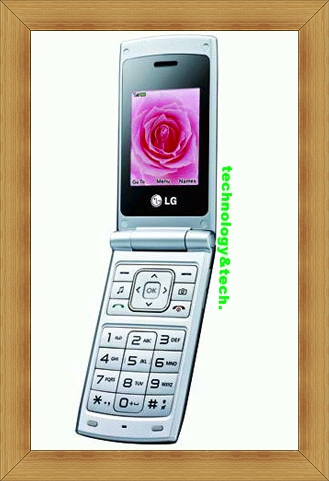
LG Russia is launching its new clamshell phone targeting are customers who like to call for a long time, it’s namely the LG A130 Phone. This new phone comes with 900 mAh battery which provides up to up to 8 hours of talktime and up to 500 hours of standby that means users can forget about plugging in their phone all the time.
LG A130 Phone Specs
2-inch TFT LCD display with touchscreen capability, provides 176 x 220 pixels of screen resolution
Built-in 0.3MP camera
On-board memoty of 5MB
Music play
FM radio
External screen
The LG A130 Phone worked in GSM 900/1800 MHz networks, its measures 92.5 x 47.5 x 16.85 millimeter and weight 86grame. If you’re interest on this LG A130 Phone, you can be found its priced at 2,990 rubles.